Coachella’s curators scour the globe for artists, architects, and designers to transform the Empire Polo Field. Newly-commissioned, large scale art installations and returning favorites offer fans art as landmark, public space, and icon—to be viewed from perspectives as diverse and dynamic as Coachella’s lineup of performers.
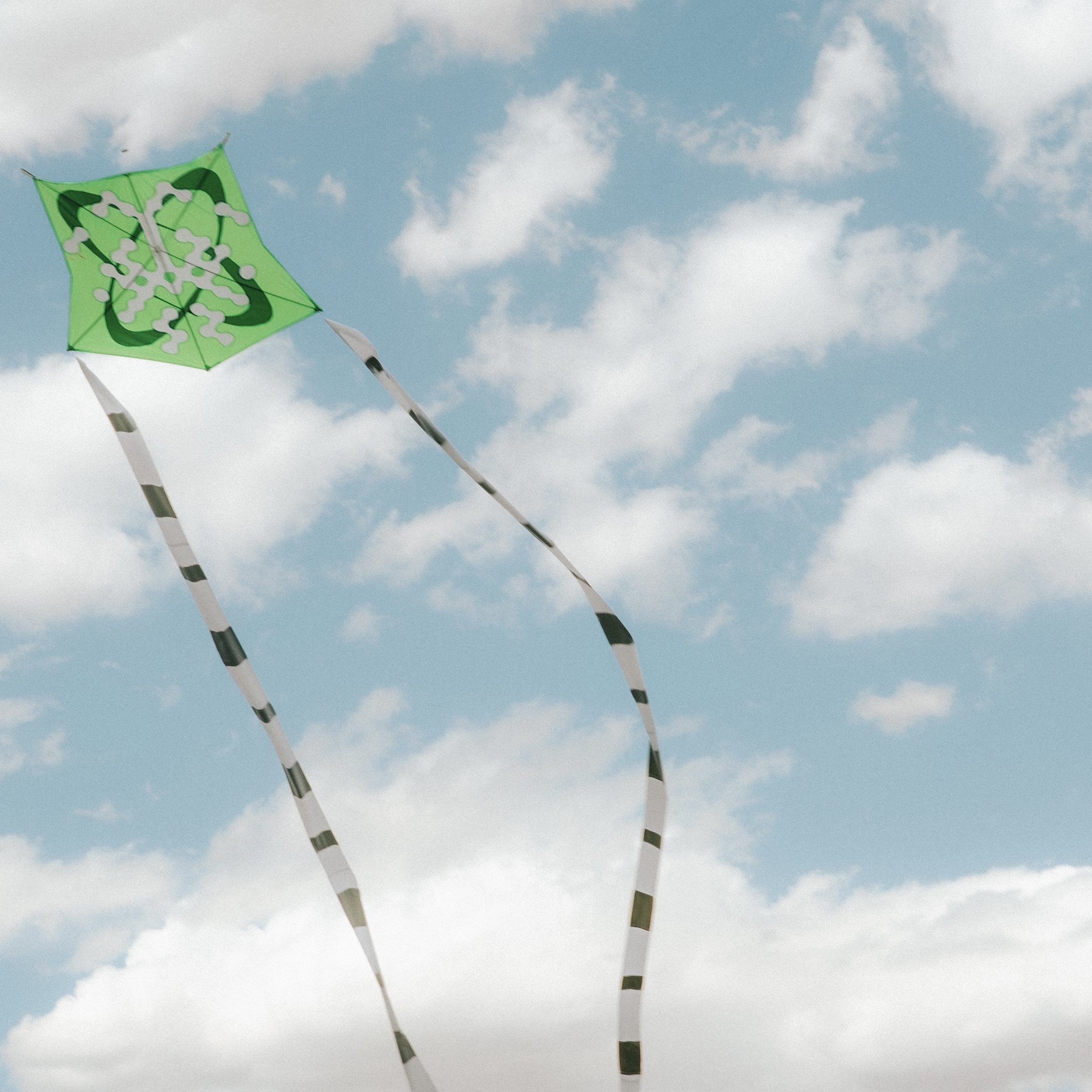
Eight oversized kites drift and dance above the festival grounds, their
neon-bright forms tracing a playful, ever-shifting constellation. Created by London- and L.A.–based collective Are You Mad in collaboration with French kite artist Jeanne Harignordoquy (SPF50), each “character” — from I See You to North Star — pairs bold, graphic iconography with simple, legible shapes designed to read from 60 meters in the air.
Roughly six feet tall and up to 10 feet wide, the kites trail exuberant, 30-foot tails that spiral, flutter, and flicker in the desert wind — a kinetic counterpoint to the calm, hovering bodies above. Constructed entirely from deadstock textiles, including ripstop, Gore-Tex, and repurposed rain jackets sourced in Los Angeles, their patchworked skins conceal a sustainable origin beneath a luminous, ethereal finish.
Part sculpture, part performance, the installation transforms the sky into a living canvas — and invites festivalgoers to rediscover the simple, childlike magic of flight.
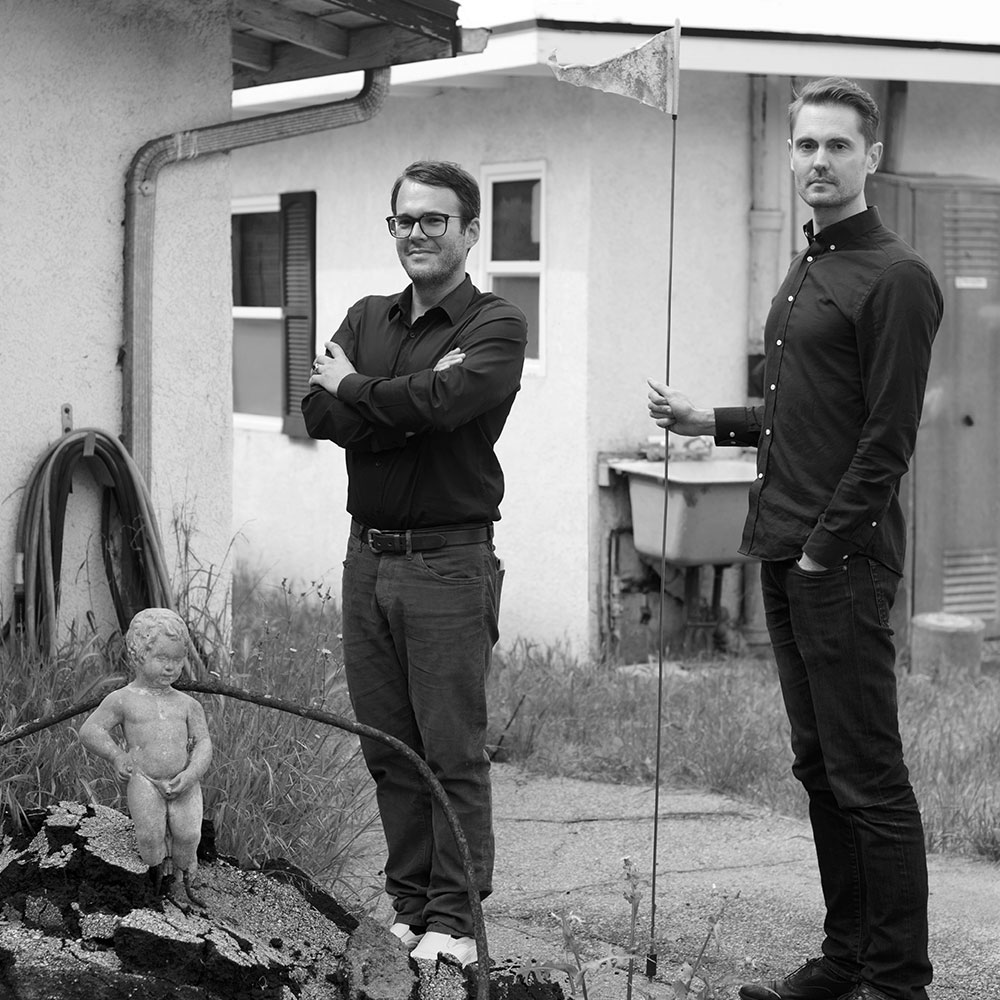
Are You Mad, founded by James Suckling and Nadeem Daniel, is a London-based creative studio that transforms waste materials into immersive design, objects, and public experiences.
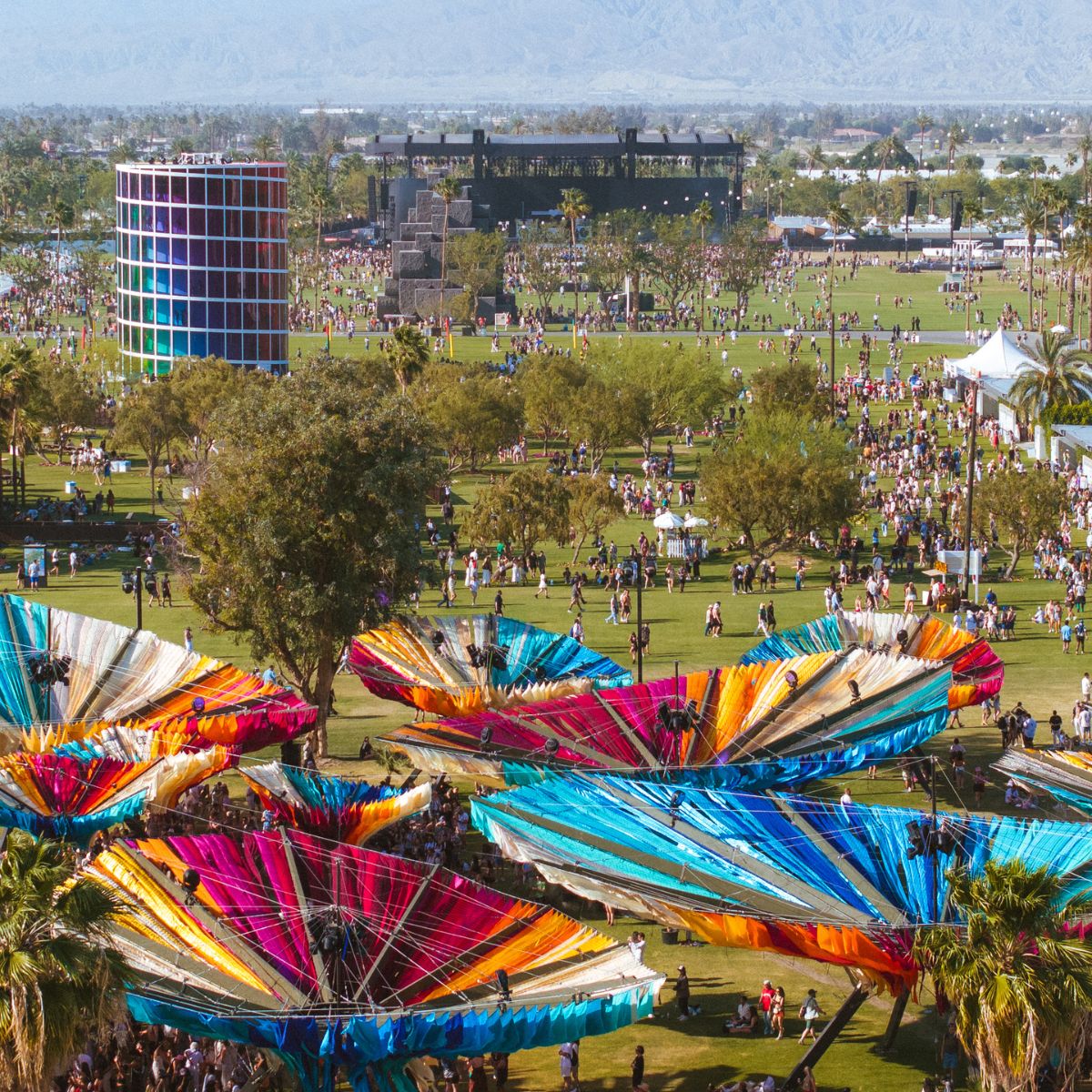
Inspired by the geometric rhythms of desert flora — specifically the star-shaped
form of the golden barrel cactus — “Starry Eyes” unfolds in a colorful array of interlocking clusters.
Designed by London-based architect Kyriakos Chatziparaskevas, the structures soar almost 40 feet tall, their pleated-fabric–covered steel ribs tilting like cactuses seeking the sun. Openings at their crowns — star-shaped oculi — frame the sky, echoing the central social space of John Lautner’s iconic Bob Hope House in Palm Springs. By day, “Starry Eyes” provides shade and respite, a place to lie back on the grass and gaze upward through patterned light and shadow. At dusk, it shifts into a lantern field: Its translucent skins glow from within, revealing the ribbed skeleton beneath, and the desert night seems to pulse with quiet, celestial energy.
Chatziparaskevas’ architectural landscape distills his fascination with geometry, light, and place into the Coachella Valley’s earth and sky palette and the communal spirit of the festival. “It can’t just be an alien object,” he says. “It must belong to the place, and to the joy of the people beneath it.”
Kyriakos Chatziparaskevas founded the architecture and design practice AR-K-C and continues to work from London in senior design roles, in which he has led notable projects.
A 75-minute large-format film and art installation. Limited Viewings Fri-Sun.
Reservations full, stand by only.
Made from thousands of fragments created by Thom Yorke and Stanley Donwood during the recording of Kid A and Amnesiac: sketches, paintings, collages, audio recordings, and handwritten notes.
Doors & Reservations
Rules/Regulations
ADA
Standby queue
A new chapter in the long-running Hippo Empire, “Network Operations” rises as a
three-story command center where the festival’s fictional communications grid hums and spirals wonderfully out of control. Rebuilt from scavenged components, the tower feels both improvised and industrial, its radio towers and satellite dishes jutting skyward like an overgrown broadcast organism. Inside its glass-front “shadow box” rooms, the hippos run a media conglomerate of their own making: a newspaper press clattering through fresh editions, a video studio swapping backdrops for shifting shoots, a radio booth crackling with hippo-DJ chatter, and a server room buzzing as data is harvested by paw. The master control room anchors the chaos.
Performers populate every floor — producers barking orders, technicians rerouting signals, a lone hippo powering the entire operation on a giant hamster wheel. Visitors observe from the outside or walk through a tunnel-like pathway.
“Network Operations” is a frenetic, absurd reflection of our content-saturated age, playful, slightly sinister, and endlessly alive.
Dedo Vabo — a 50/50 partnership between artists Derek Doublin and Vanessa Bonet — blend sculpture, performance, and satirical world-building at massive scale, evolving their Hippo Empire since “Power Station” (2013), “Corporate Headquarters” (2015), and “Hazardous Interstellar Planetary Operations (H.I.P.O.)” (2019).
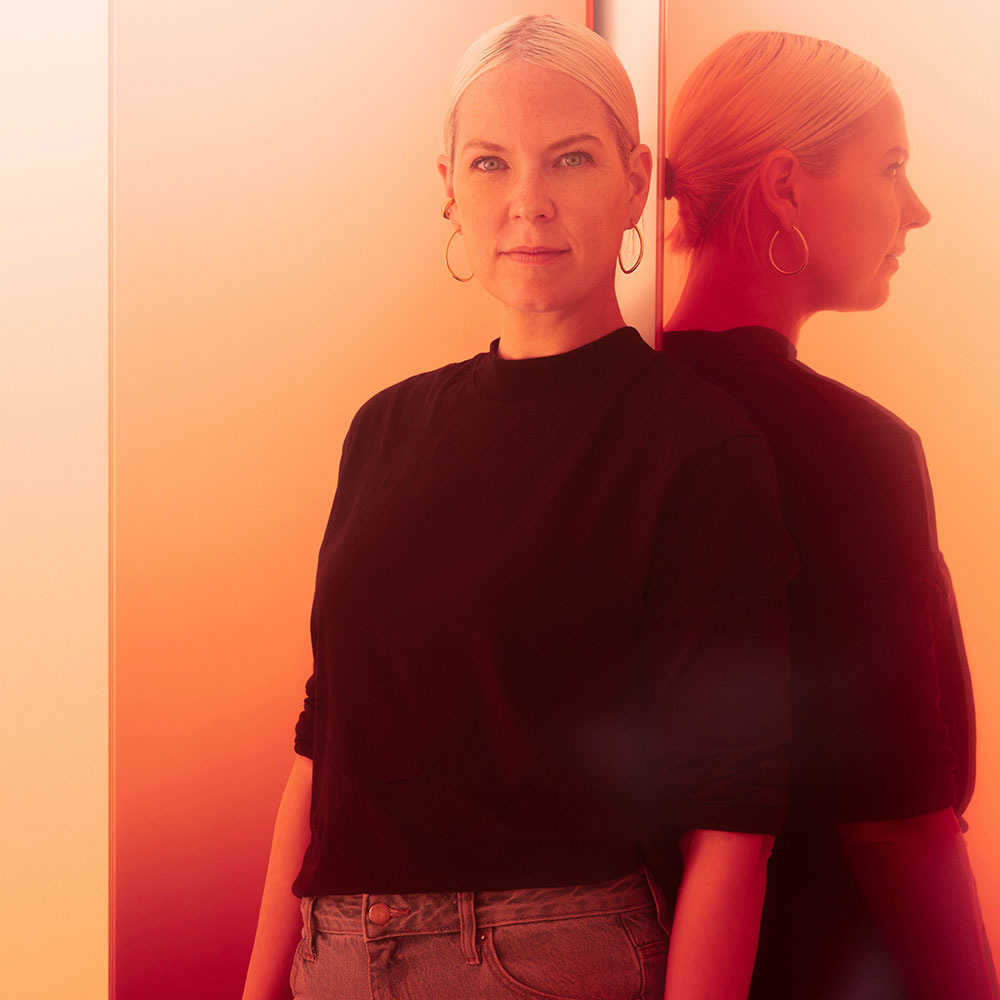
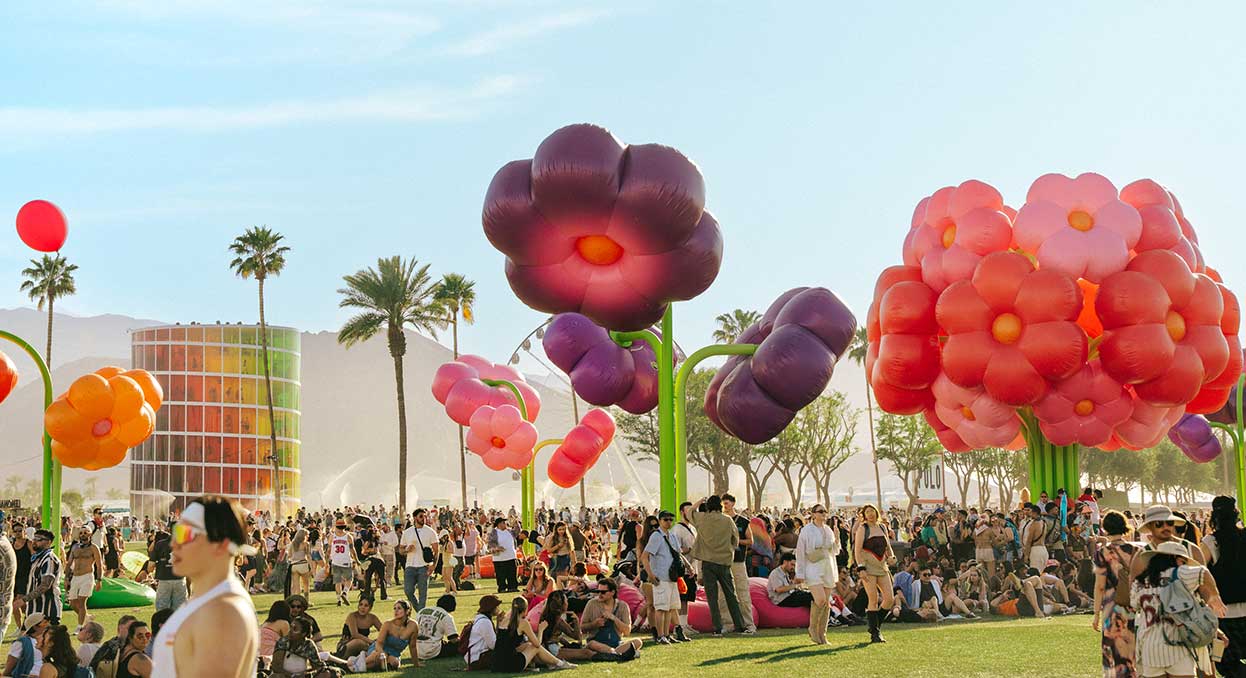
A soft, inflated landscape that twists and opens like a desert mirage, “Maze”
invites festivalgoers to wander, slow down, and take refuge. Inspired by the natural contours of the Coachella Valley, its curved PVC forms rise in varying heights and shift in color from pale yellow at the perimeter to deep red at the core. The result is a gradient terrain of gentle volumes that filter light and sound by day and provide shaded pockets for rest and reflection. Clearings offer framed glimpses toward the stages, while seating along the outer edges provides relaxing vantage points for watching performances.
At night, the installation becomes an illuminated oasis: The inflated structures glow from within, turning the maze into a warm, radiant landscape.
Throughout, Marcelis’ signature themes are woven into the experience: light as a tangible material, playful transparency, bold silhouettes, and a sensory focus that foregrounds touch, atmosphere, and emotion.
Based in Rotterdam, designer Sabine Marcelis is known for her refined material investigations and pure geometric forms. Working across product, installation, and spatial design, she pushes manufacturing processes to reveal surprising visual effects, crafting environments where the sensorial experience itself becomes the function.
A soaring steel totem animated by a stack of subtly anthropomorphic “characters,”
“Visage Brut” reimagines the logic and mythology of a totem pole through the language of contemporary construction. Designed by The Los Angeles Design Group, the tower is composed of modular boxes — each one folded, rolled, cut, or warped just short of losing its structural integrity. The result is a vertical procession of hybrid geometries that both perform the physical labor of holding up the weight above and project an uncanny, almost figurative presence.
Born from an experimental collaboration with software-assisted steel fabricator Stud-IO Construction, the installation transforms an industrial material used in retail construction into an expressive form. Its mesh and selectively skinned surfaces shift from sculptural mass to filigreed lattice as light changes, and nighttime illumination animates its dual nature. Encountered as both landmark and invitation, “Visage Brut” offers shaded niches, intricate surfaces, and a layered legibility that encourages festivalgoers to slow down and look closely.
Andrew Holder and Claus Benjamin Freyinger are co-principals of The Los Angeles Design Group (The LADG), an architectural practice known for merging historical ideas with contemporary urban challenges. Holder is chair of Graduate Architecture, Landscape, and Urban Design at Pratt Institute; Freyinger lectures in the graduate architecture program at UCLA.
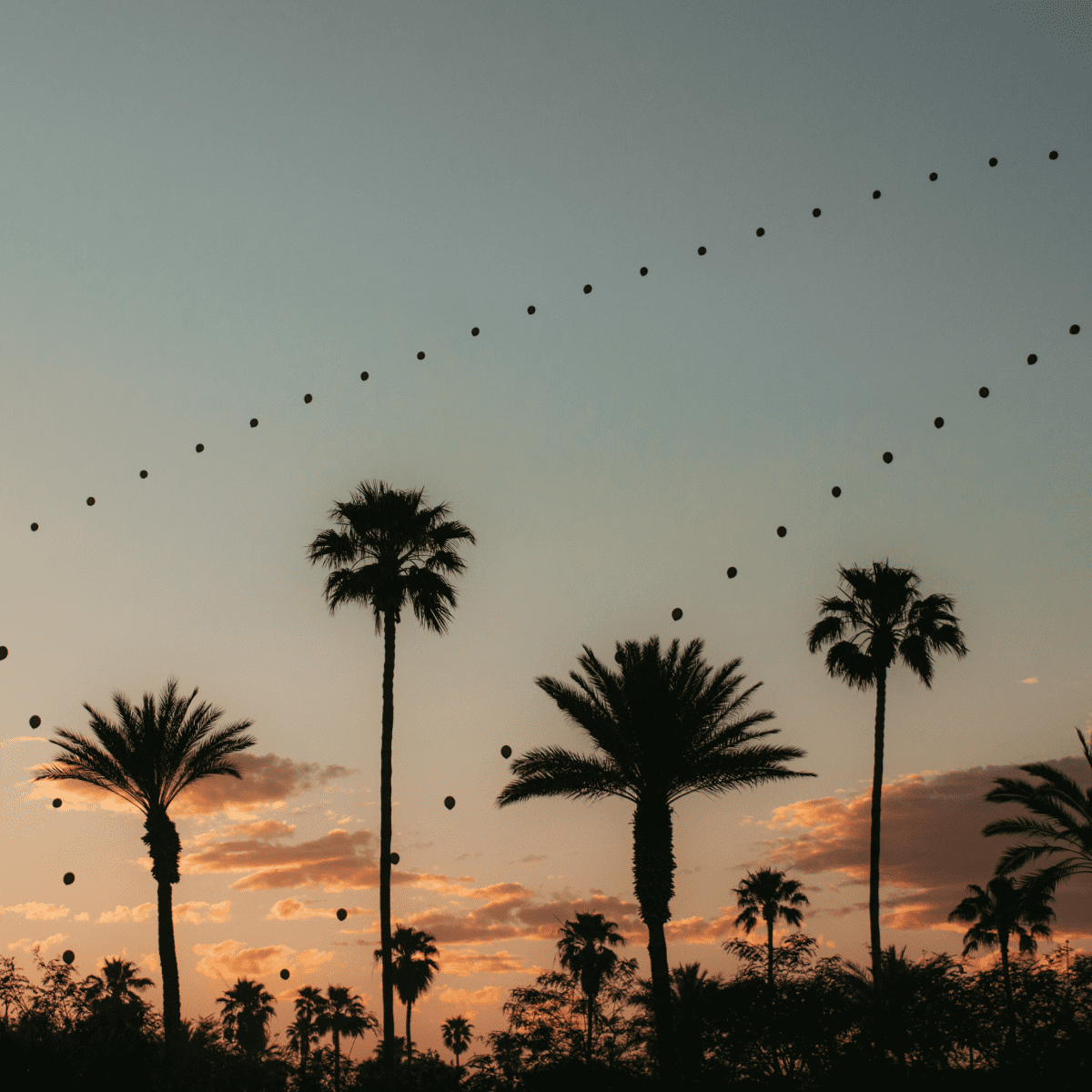
A floating ribbon of color that reshapes itself with every shift of wind,
“Balloon Chain” arcs across the sky in strands of 50 to 200 balloons, each one carrying light, motion, and a burst of joy. By day, the lines fly like kites — sometimes uniform, sometimes mixed in vibrant palettes chosen to contrast the desert’s ever-changing blues and grays. After sunset, tiny LED lights clipped to each balloon glow against the night, turning the strands into luminous constellations.
Though deceptively simple, the installation is a feat of calculation and choreography. The artist gauges wind strength, festival obstacles, and FAA height limits to determine each line’s length and lift — some stretching more than a mile — pushing the work as far as he can without risking an epic tangle. Once airborne, “Balloon Chain” becomes a magnetic landmark; visitors track the line to its grounding point, often taking turns holding it aloft for photos as it ripples overhead.
Robert Bose, a New York–based artist, musician, and Army National Guard member with roots in Florida and Texas, creates buoyant, site-responsive installations worldwide.
Do LaB, a scene-setting, Los Angeles-based creative team known for transforming venues into visually spectacular and interactive experiences
returns to the Coachella festival with fresh and imaginative stage designs. Their work encourages authentic human connection, art as transformative experience, and environmental sustainability and inspires individuals and society to create a more peaceful culture.

Don Kennell is a Santa Fe–based sculptor best known for monumental animal forms that merge
industrial muscle with mythic presence. Fabricated from layered, bolted, and fused metals—often recycled or cast off — his sculptures transform coyotes, bears, dogs, birds, and roadrunners into anatomically precise, oversized icons that command space and invite interaction. Kennell’s process gives nature what he calls an “industrial sensibility,” turning unlikely materials into works that challenge throwaway culture while sparking curiosity and delight.
Since 2013, Kennell has been a defining artistic presence at the Coachella Valley Music and Arts Festival. His large-scale installations — including Yard Dog (2013), Roadrunner (2014), Big Bear (2015), and the towering 27-by-44-foot Mustang (2022) — have become festival landmarks. Many of these works were later re-sited in surrounding cities, where they now stand as beloved public sculptures and enduring symbols of the Coachella Valley’s cultural landscape.
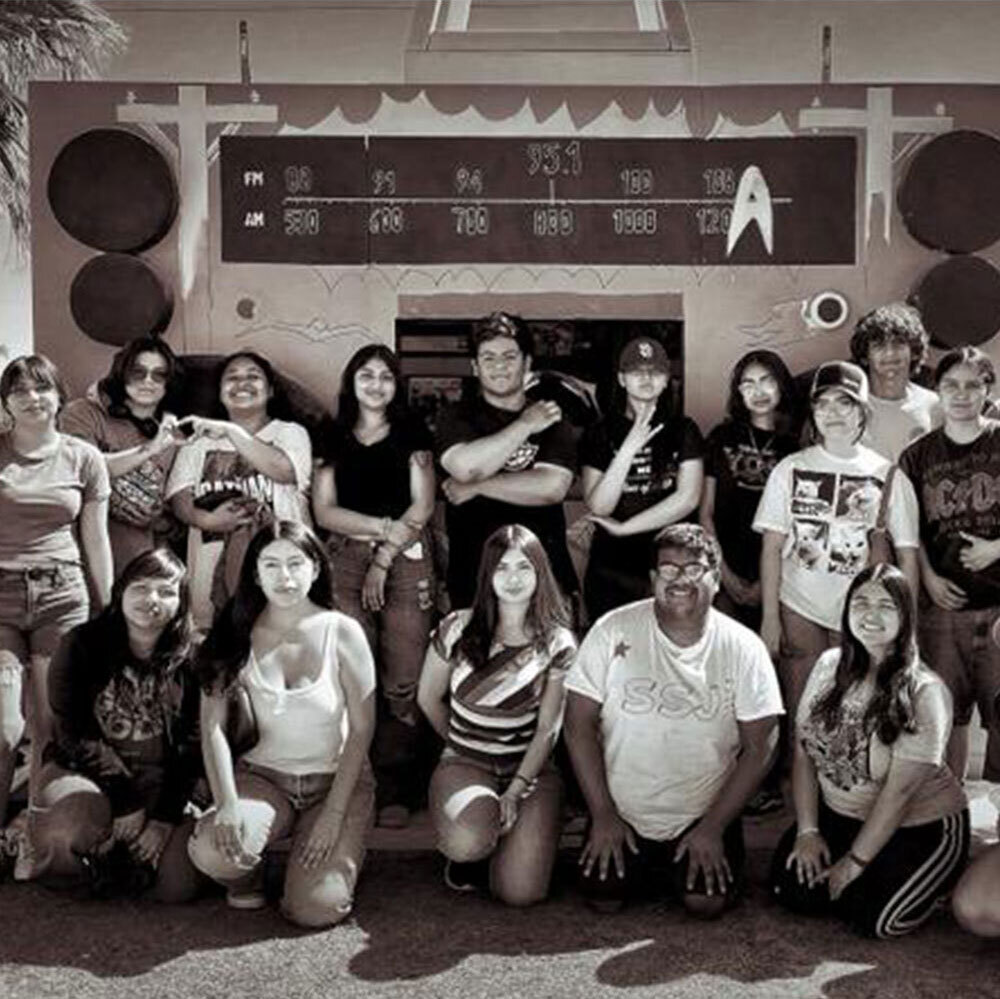
Founded in 2004, this grassroots collective has become a vital nonprofit arts organization
rooted in cultural preservation, social justice, and creative empowerment. Raices Cultura provides free access to visual and performing arts, education, and cultural experiences that amplify personal voice, civic engagement, and community leadership — especially among local youth.
At Coachella, Raices Cultura plays a quietly powerful role in shaping the festival’s creative ecosystem. As leaders of the Coachella Art Studios, the collective transforms a corner of the global spectacle into an inclusive, hands-on space where artmaking becomes a shared language. Festivalgoers are invited to paint, sculpt, and collaborate alongside emerging artists from the East Valley, while a cohort of young creators receives mentorship that connects local perspectives to an international stage.
Raices Cultura ensures that Coachella’s art reflects the region’s lived experiences and cultural richness. Their presence grounds the festival’s immersive art world in authenticity, reminding audiences that creativity is not only spectacle — but also connection, continuity, and collective growth.
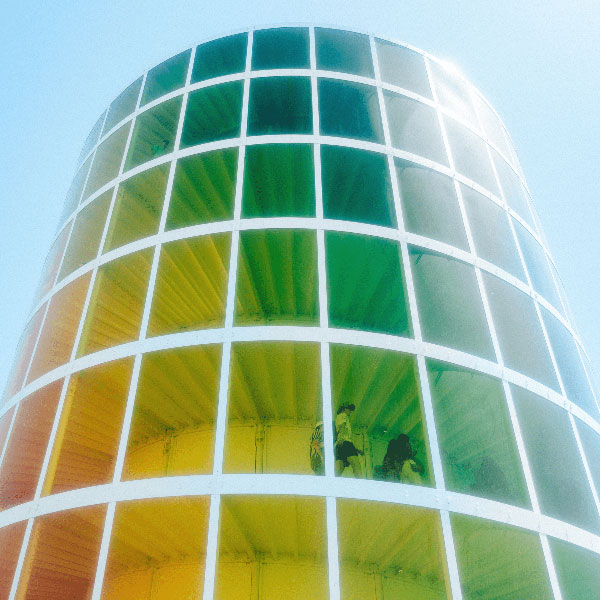
The seven-story tower invites festivalgoers into an ever-changing journey of light,
landscape, and perspective. From afar, the spiral structure punctuates the massive grounds with its translucent panels glowing with gradients shaped by the desert’s singular sunrises and sunsets. Inside, the experience becomes intimate and atmospheric: As visitors ascend the air-conditioned walkway, each turn reveals a new palette — burning reds at dawn, vivid greens and yellows at midday, deep blues and violets as evening settles. The pavilion softens the festival’s intensity, offering a pocket of serenity and space for reflection while framing 360-degree views from its observation deck.
At night, “SPECTRA” transforms again, animated by thousands of LEDs, capable of producing millions of colors that ripple through the tower. Blending analog design with advanced lighting control, the structure mirrors the shifting Coachella sky while creating a luminous world of its own.
NEWSUBSTANCE is a U.K.-based studio known for large-scale interventions — from drone shows to sculptural spectacles — that merge architecture, engineering, and performance.